
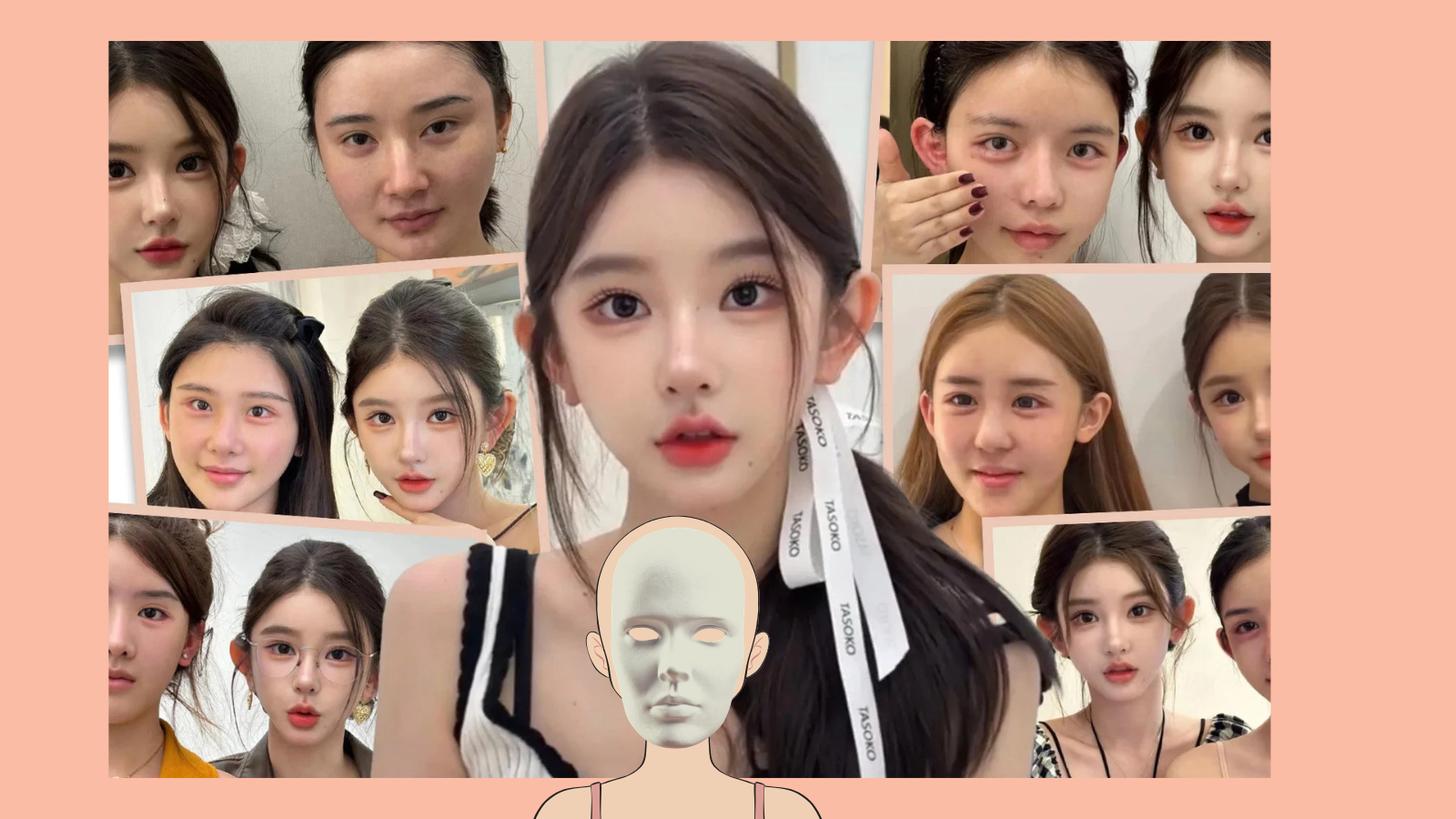
What if one influencer became so obsessed with beauty… that she turned her own face into a blueprint?
Not a makeup tutorial.
Not a filter.
Not even a beauty challenge.
A real face. Real injections. Real surgeries.
And according to reports, hundreds of women in China allegedly paid to look exactly like one woman Wang Jing.
Same cheeks.
Same jawline.
Same lips.
Same nose.
For a while, it looked like Wang Jing had discovered the perfect business model in the age of social media.
Then the scandal began.
Who Is Wang Jing?
Before controversy, Wang Jing was known as a rising beauty influencer on Douyin, China’s version of TikTok.
She stood out because of her appearance.
Her face matched one of China’s most viral beauty standards—the “babyface” aesthetic.
A small face.
Big eyes.
Soft cheeks.
Sharp nose.
Smooth skin.
A youthful, almost doll-like appearance.
Online, thousands of people admired her look.
Some wanted her skincare routine.
Some wanted her makeup secrets.
But many wanted something far more extreme.
They wanted her face.
She Spent Over ₹1 Crore to Build Her Face
Before Wang Jing became one of China’s most talked-about beauty influencers, she was just another girl chasing internet beauty standards.
But unlike most people…
She didn’t stop at makeup.
She didn’t stop at filters.
She reportedly spent over 1 million yuan (around $140,000 / ₹1+ crore) transforming her face into what China’s beauty industry calls the “babyface” aesthetic.
According to her own videos on Douyin, the transformation happened over several years and involved multiple cosmetic procedures.
Reported procedures include:
- Chin enhancement
- Nose reshaping
- Cheek fillers
- Lip fillers
- Botox injections
- Facial contour correction
- Skin tightening treatments
Wang Jing even admitted that after some early surgeries, her face became uneven and required multiple corrective procedures before she achieved the final look. She also said half of each year was spent recovering from surgeries.
And once she finally created the face she wanted…
She turned it into a business.
The Price of Perfection
Wang Jing reportedly revealed that she spent over 1 million yuan—around $140,000 USD—on cosmetic procedures to create her ideal appearance. Reports described years of beauty treatments and facial enhancement work.
Though not every procedure was publicly listed in detail, media reports connected her transformation with cosmetic treatments such as:
- Facial fillers
- Botox treatments
- Nose enhancement
- Chin shaping
- Facial contouring
- Lip enhancement
- Skin tightening procedures
Her transformation made her stand out online.
And online attention quickly turned into influence.
When beauty becomes copy-paste… what happens to identity?
According to reports, Wang Jing publicly said she spent more than 1 million Chinese yuan on her face—that’s roughly $140,000 USD (around ₹1.1–1.2 crore INR, depending on exchange rates). She said it took years of surgeries, corrections, fillers, and recovery to create her “babyface” look.
So your blog section should say something like:
When Beauty Became a Business
Most influencers sell products.
Wang Jing allegedly sold something else:
Her face as a template.
As her popularity grew, reports claimed clients began visiting cosmetic clinics linked to her beauty business, asking doctors for one thing:
“Make me look like Wang Jing.”
According to media coverage, followers reportedly received similar consultation plans, similar injection patterns, and similar facial enhancement designs.
The internet soon gave it a nickname:
The Face Copying Clinic.
And that nickname spread fast.
Hundreds of Girls, One Look
Chinese media reports claimed that hundreds of women wanted to copy Wang Jing’s exact aesthetic.
Online users started noticing something strange.
Different women…
Different backgrounds…
Different cities…
But almost identical faces.
The same cheeks.
The same chin.
The same smile.
The same expressions.
To many people, it felt less like beauty inspiration…
…and more like human cloning through cosmetic surgery.
That’s when criticism exploded.
The Scandal That Changed Everything
As Wang Jing’s beauty empire grew, online investigators and critics began questioning her marketing.
Reports later claimed that some promotional before-and-after images connected to her business created controversy, with accusations of misleading beauty advertising.
On Chinese social media, backlash came quickly.
People began asking:
Was this beauty… or manipulation?
Was individuality being replaced by internet trends?
And how far should influencers be allowed to go when selling appearance?
The image of Wang Jing as a beauty icon slowly started changing.
Now people weren’t just calling her beautiful.
They were calling her dangerous.
The Dark Side of Social Media Beauty
Wang Jing’s story isn’t really about surgery.
It’s about something deeper.
In a world ruled by filters, likes, followers, and viral beauty trends, appearance has become more than identity.
It has become currency.
And when one face becomes famous enough…
People stop asking:
“Do I look good?”
They start asking:
“Do I look like her?”
That may be the darkest part of this story.
Not that one influencer changed her face…
But that hundreds of people may have wanted to lose their own.
Final Thoughts
Whether you see Wang Jing as a smart entrepreneur, a social media icon, or a warning sign of modern beauty culture…