
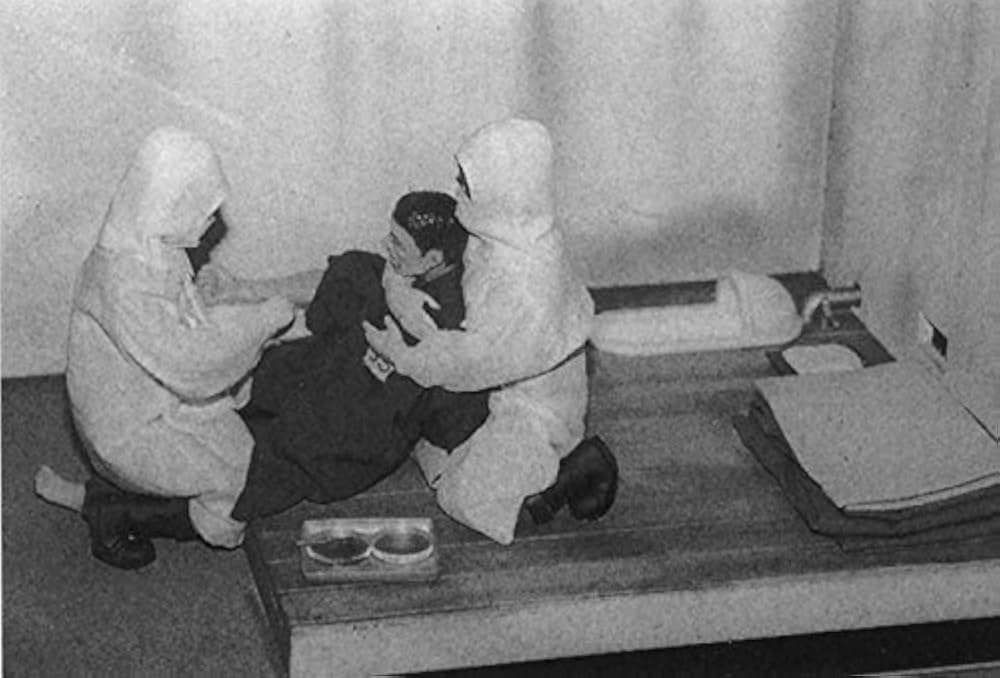
During World War II, one of the most horrific and unethical acts in human history was committed by the Japanese Imperial Army through Unit 731 a covert biological and chemical warfare research unit of the Japanese army. This secret unit operated from 1935 to 1945, primarily based in Harbin, Manchuria (northeast China), and carried out some of the most brutal human experiments ever recorded.
What Was Unit 731?
Unit 731 was officially disguised as a “Water Purification and Epidemic Prevention Research Unit,” but in reality, it was a facility dedicated to biological warfare research. It was led by General Shiro Ishii, who oversaw gruesome experiments on thousands of innocent civilians, prisoners of war (POWs), and people from occupied territories.
The Horrifying Experiments
Victims were mostly Chinese civilians but included Russian, Korean, and Allied POWs. These people were referred to as “logs” (maruta) by the Japanese, dehumanizing them into mere test subjects. The experiments included:
- Vivisection: Prisoners were dissected alive without anesthesia to study the effects of diseases and organ function in real time.
- Biological Weapon Testing: Pathogens such as plague, cholera, anthrax, and typhoid were deliberately infected into prisoners to study the progression of disease and test biological weapons.
- Frostbite Experiments: Prisoners were exposed to freezing temperatures to study how the human body reacts and how frostbite develops. Limbs were often amputated without medical care.
- Forced Infections: Victims were injected with bacteria to see how the body reacted, often resulting in excruciating death over days or weeks.
- Chemical Weapon Experiments: Exposure to poisonous gases tested how long and under what conditions a human could survive.
The Scale of Horror
- Estimates suggest that 3,000 to 12,000 people died under these experiments, though exact numbers are unknown due to the secretive nature of the program.
- Entire villages were wiped out or subjected to experiments.
- The unit also tested how weapons like grenades and flamethrowers affected the human body.
Post-War Cover-Up
After Japan’s surrender in 1945, many of the top officers and scientists involved in Unit 731 were granted immunity by the United States in exchange for the data gathered from their horrific experiments.
- No one was ever prosecuted for these war crimes.
- Most documents were destroyed, and the Japanese government long denied the existence or scale of Unit 731.
- Survivors rarely came forward, fearing social stigma or retaliation, and many victims’ families remain unaware of the full story.
Why It Matters
- Unit 731 stands as one of the most extreme examples of human rights violations in modern history.
- It is often hidden in textbooks or politically minimized, especially in Japan, where some groups attempt to deny or gloss over the atrocities.
Remembering this tragedy is crucial not only to honor the victims but to remind future generations about the depths of cruelty human beings are capable of when ethics are abandoned in the name of science or war.(For more truth beyond the data, read blankgirl..)
Leave a Reply